
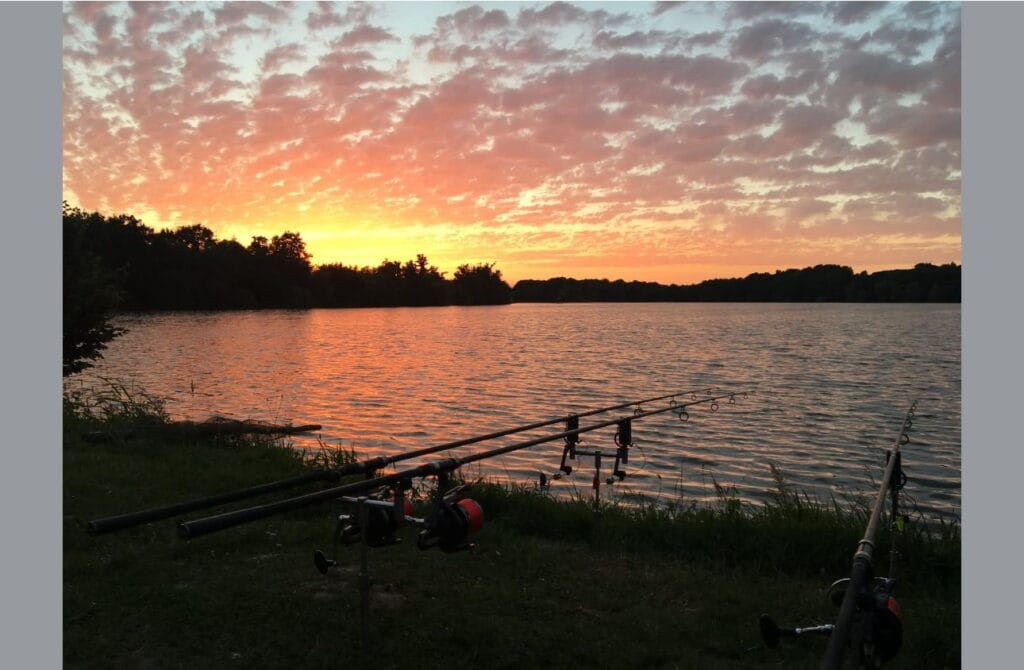
Autumn can be a fascinating time to target carp.
As the heat of summer begins to fade, water temperatures change, weather patterns become less predictable and the fish may start behaving differently from only a few weeks earlier.
For anglers travelling to France, this period can offer some exciting opportunities.
Carp may still be feeding actively, natural food can influence where they spend time and changing conditions can create opportunities for those prepared to adapt.
However, autumn fishing isn’t about relying on one guaranteed tactic.
There is no single rig, bait or area of a lake that will always produce fish throughout the season.
The most successful approach is often to combine good preparation with careful observation and a willingness to change your plans.
Here are some practical autumn carp fishing tactics to consider when visiting a French lake.
1. Let the Lake Tell You Where to Fish
The most important tactic during autumn is often the simplest one: watch the water.
It can be tempting to arrive at a new venue with a carefully prepared plan, particularly if you’ve studied photographs, maps or previous catch reports.
But conditions may have changed since those reports were produced.
The fish may no longer be using the same areas they occupied during the summer. A change in wind direction, water temperature or natural food availability can all influence their movements.
Spend time looking for:
- Carp showing or rolling
- Bubbling or fizzing
- Disturbed silt
- Birds feeding in shallow areas
- Natural food activity
- Areas affected by wind
- Fish moving along margins or near features
Sometimes the best information is right in front of you.
A few minutes spent watching the lake before casting can be more valuable than immediately putting all three rods into the same area.
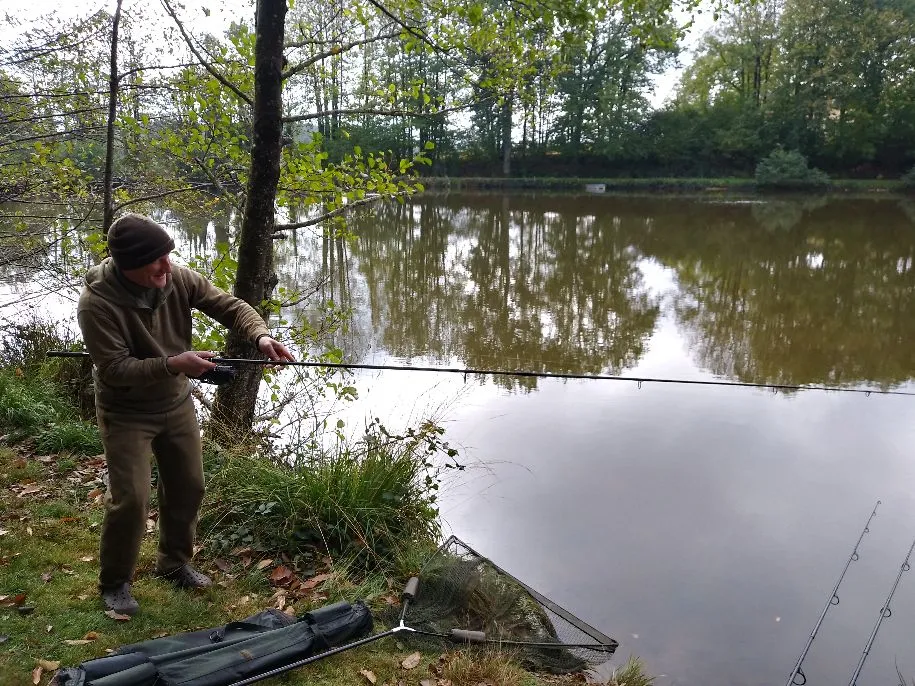
2. Pay Attention to the Wind
Wind can be an important factor at any time of year, but it is particularly useful to monitor during autumn.
A wind can push warmer surface water towards one end of a lake, move natural food around and create areas where carp feel comfortable feeding.
However, it is important not to follow the wind blindly.
A strong, cold wind arriving after a sudden change in weather may affect the lake differently from a mild wind that has been blowing consistently for several days.
Consider:
- The direction of the wind
- How long it has been blowing
- Whether the wind is warm or cold
- The strength of the wind
- Whether the fish are showing in the affected area
- The depth and features of the receiving bank
The windward bank may be productive, but the fish still need to be there.
Use the wind as a clue rather than an automatic rule.
3. Look for Areas Holding Natural Food
Autumn carp fishing can be strongly influenced by natural food.
As the season changes, different food sources may become important around the lake.
Carp could be attracted to areas containing bloodworm, insect life, snails, mussels, seeds, aquatic vegetation or other natural food sources.
This means that features such as weed beds, silty areas, marginal vegetation and lakebed changes deserve attention.
Don’t simply look for the deepest part of the lake.
A shallow area containing plenty of natural food may be more attractive than a deeper, featureless section.
Likewise, a margin that appears unremarkable from the bank may contain a rich feeding area.
If the venue allows you to walk around the lake before fishing, use that opportunity to inspect the margins and look for signs of activity.
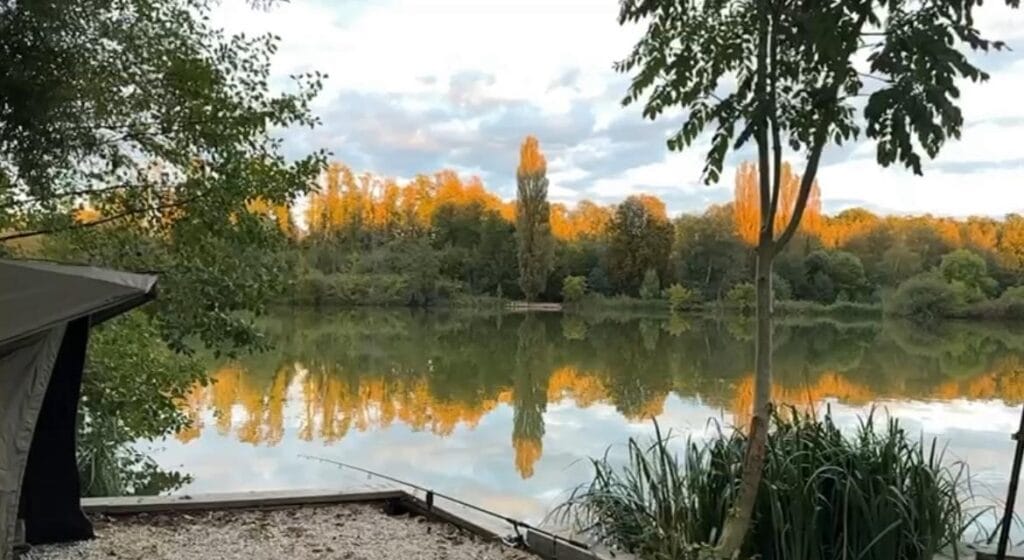
4. Don’t Automatically Fish the Same Areas You Used in Summer
A common mistake is assuming that the most productive summer spots will remain productive throughout autumn.
Sometimes they will.
But as conditions change, carp may alter their routines.
They might spend more time in shallower water during a warm spell, move towards wind-affected areas or visit different features as natural food becomes available.
This is why flexibility is so important.
If you have fished a particular area successfully during summer, it may still be worth considering. But don’t ignore other parts of the lake simply because they weren’t productive previously.
Look at the conditions on the day.
The best area in September may not be the best area in October, and the best area in the morning may not remain the best area by evening.
5. Use the Weather to Guide Your Decisions
Autumn weather can change quickly.
A period of warm sunshine may be followed by rain, wind or a sudden drop in temperature.
These changes can influence carp behaviour, although the exact effect will vary between venues.
Instead of looking only at the forecast for the day ahead, consider the weather pattern over several days.
Ask yourself:
- Has the temperature been rising or falling?
- Has the wind changed direction?
- Has there been heavy rain?
- Has the weather remained stable?
- Are the nights becoming noticeably colder?
- Have the fish shown in response to the conditions?
A stable period of weather may produce different fishing opportunities from a sudden change.
The key is to treat the weather as part of the wider picture rather than expecting it to provide a guaranteed answer.
6. Adjust Your Baiting Strategy
There is no universal autumn baiting strategy that works on every lake.
Some fisheries may produce well with a steady application of boilies or pellets, while others may require a more cautious approach.
The amount of bait you use should depend on several factors, including:
- Water temperature
- Fish activity
- Stock levels
- The size and depth of the lake
- Other anglers fishing nearby
- The venue’s rules
- The response of the carp
If the fish are clearly feeding, a consistent baiting approach may be effective.
If activity is limited, it may be sensible to start more carefully and build up only when the signs suggest it is appropriate.
Avoid assuming that cooler weather automatically means the carp need very little food.
Equally, don’t introduce large quantities simply because autumn is traditionally associated with heavy feeding.
Let the fish and the conditions guide your decisions.

7. Consider Smaller, More Accurate Presentations
Autumn can be a good time to focus on accuracy.
Rather than spreading bait over a large area without a clear reason, consider presenting your hook bait close to where you have seen signs of activity.
A small, accurate presentation can be particularly useful when:
- Fish are showing in a specific area
- You are fishing close to a feature
- The lakebed changes over a short distance
- Natural food is concentrated in one location
- You are unsure how actively the fish are feeding
Accuracy does not necessarily mean fishing with tiny amounts of bait all the time.
It means having a clear reason for where you place your rig and how you introduce bait.
If the fish move, your presentation may need to move with them.
8. Make the Most of the Margins
The margins can be overlooked by anglers who immediately focus on open water.
However, carp often use marginal areas for feeding, shelter and movement.
Autumn can be a particularly good time to inspect the margins because changing conditions may bring fish closer to features, weed beds or areas containing natural food.
Look for:
- Overhanging trees
- Reed beds
- Weed edges
- Shallow shelves
- Marginal vegetation
- Small bays
- Areas where the lakebed changes
Always fish responsibly and follow the fishery’s rules regarding distance from the bank, casting and the use of bait.
A margin spot should never be selected simply because it looks attractive.
Look for evidence that the fish are using it.

9. Don’t Ignore Deeper Water
Although shallow areas can become attractive during warmer autumn periods, deeper water should not be dismissed.
As temperatures fall and conditions change, carp may move between different depths.
A deeper area could provide more stable conditions, while a shallow area may become attractive during periods of sunshine or increased natural food activity.
The important point is to avoid becoming too committed to one theory.
If the fish are showing in deeper water, investigate it.
If they are moving into the shallows, respond accordingly.
On a new lake, depth changes can be particularly valuable to identify.
A feature that transitions from shallow to deep water may offer several options as the day progresses.
10. Spread Your Rods When the Situation Calls for It
When fishing a new lake, placing all your rods in one area can sometimes limit your understanding of what is happening.
Depending on the venue, swim layout and fishery rules, spreading your rods across different depths or features may help you learn more about the lake.
For example, you might consider:
- One rod near a margin feature
- One rod on a clear area of lakebed
- One rod towards deeper water
- Different distances from the bank
- Different baiting approaches
This can help establish where the fish are moving and which types of presentation are producing.
However, spreading rods should not become a rigid rule.
If carp are clearly feeding in one area, concentrating your efforts may make more sense.
The best approach is the one that responds to the evidence available.
11. Keep Your Rigs and Hook Baits Simple
Autumn fishing can encourage anglers to overcomplicate their approach.
There is often a temptation to change rigs repeatedly, introduce unfamiliar baits or try something completely different simply because the season has changed.
Sometimes a change is necessary.
But there is no need to abandon a reliable presentation without a reason.
Use rigs that you are confident in and that suit the lakebed, weed levels and fishing situation.
Make sure your hooks are sharp, your leaders or main lines are in good condition and your hook baits are appropriate for the venue.
If you do change something, try to understand why.
Was the lakebed unsuitable?
Were small fish causing problems?
Were you fishing over weed?
Did the fish appear cautious?
A deliberate adjustment is usually more useful than changing everything at once.
12. Learn From the First 24 Hours
The first day of a fishing holiday can provide valuable information.
You may not catch immediately, but that doesn’t mean the day has been wasted.
Use the first 24 hours to build a picture of the lake.
Record:
- Where fish have been seen
- Weather conditions
- Wind direction
- Water clarity
- Successful areas
- Bait response
- Time of activity
- Any changes in fish behaviour
If you catch a fish, consider what the circumstances can tell you.
Was it caught during a weather change?
Was it near a feature?
Was it caught over a particular bait?
Was it during daylight or darkness?
These observations can help you make better decisions as the week progresses.
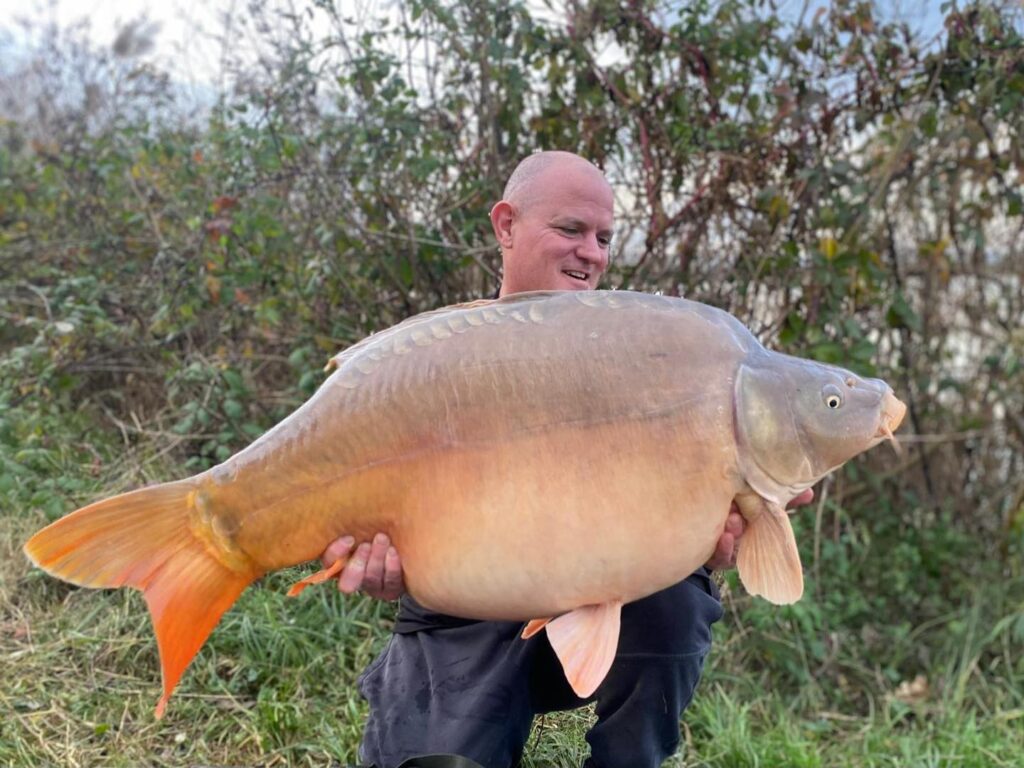
13. Be Prepared to Change Your Plan
Perhaps the most important autumn tactic is the willingness to adapt.
You may arrive expecting to fish a particular area, only to find that the wind has changed or the carp are showing elsewhere.
You may plan to introduce a large amount of bait, then discover that the fish are feeding cautiously.
You may expect the margins to produce, but find that the deeper water is more productive.
Fishing is full of variables.
The ability to recognise when something isn’t working and make a sensible adjustment can be more valuable than following a fixed plan.
That doesn’t mean changing tactics every hour.
Give an approach enough time to produce useful information, but remain open to the possibility that the lake is telling you to do something different.
Enjoy the Experience as Well as the Fishing
Autumn carp fishing in France is about more than tactics.
The cooler mornings, changing scenery and quieter atmosphere can make the entire experience memorable.
Take time to enjoy the surroundings.
Watch the water.
Learn how the lake behaves.
Share the experience with your fishing partner or group.
And remember that the best fishing holidays are not always defined by the number of fish caught.
Sometimes the most valuable result is returning home with new knowledge, a memorable capture and a better understanding of how to approach changing conditions.
Plan Your Next Autumn Carp Fishing Holiday
If you’re looking for an autumn carp fishing adventure in France or elsewhere in Europe, Angling Paradise can help you discover a range of venues to suit different fishing styles and group sizes.
Whether you’re searching for a lake containing big carp, a peaceful venue for a small group or an exclusive lake experience, there are plenty of destinations to explore.
The right venue, careful preparation and an adaptable approach can help you make the most of your time on the bank.
Explore Angling Paradise and start planning your next autumn carp fishing holiday.
Final Thoughts
Autumn carp fishing tactics are not about following a strict formula.
They are about paying attention.
Watch the water.
Monitor the weather.
Look for natural food.
Think carefully about location.
Adjust your baiting strategy.
And be prepared to change your approach when the conditions demand it.
Every lake is different, and every autumn fishing trip brings its own challenges.
But with an open mind and a willingness to learn, autumn can provide some truly memorable carp fishing.
Find the fish, trust your observations and make the most of the season.