
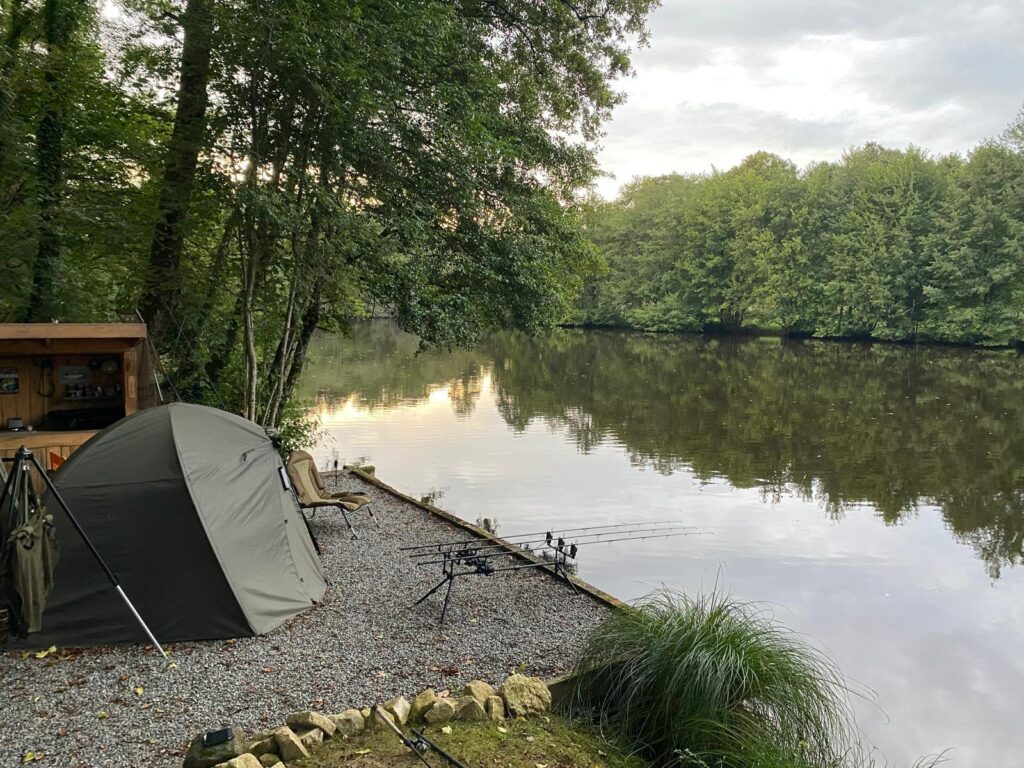
Your first carp fishing holiday in France is a big step.
Perhaps you’ve spent years hearing stories from friends who make the trip every summer.
Maybe you’ve watched videos of enormous French carp slipping over landing nets.
Or perhaps you’ve simply reached the point where your local fishing isn’t enough and you’re ready to try something completely different.
Whatever brought you here, planning your first carp fishing holiday in France can feel slightly daunting.
Which lake should you choose?
How do you get there?
What should you take?
What happens when you arrive?
Will the fishing be completely different from the UK?
And, perhaps most importantly:
What if you’ve never done anything like this before?
The good news is that thousands of British carp anglers travel to France every year, and once you’ve experienced your first trip, you’ll probably wonder why you waited so long.
Here’s what to expect from start to finish.
1. It Starts With Choosing the Right Lake
Before thinking about ferries, bait or how many kilos of boilies you can fit into the car, you need to choose the right venue.
And this is where first-time visitors can easily become overwhelmed.
France has an enormous variety of carp lakes.
There are small intimate waters.
Large challenging lakes.
Runs waters.
Big-carp venues.
Lake-exclusive fisheries.
Individual swim bookings.
Drive-and-survive lakes.
Venues with accommodation.
Some lakes provide meals.
Some offer tackle hire.
Others are designed for anglers who want to bring absolutely everything themselves.
Don’t choose your first French venue purely because you’ve seen a photograph of its biggest carp.
Think about the holiday you want to experience.
If regular action is important, consider a well-stocked runs water.
If your dream is a new personal best and you’re happy to accept fewer opportunities, a big-carp lake might appeal more.
If you’re travelling with several friends, booking an entire lake could give you the freedom and atmosphere you’re looking for.
The right lake is the one that suits you and your group.
2. Booking Earlier Gives You More Choice
Once you’ve found a lake you like, check availability.
Popular French carp fisheries can fill their most desirable weeks well in advance, particularly during spring and early autumn.
If several anglers are travelling together, booking early becomes even more important.
Finding one week that suits four people’s work, family commitments and travel arrangements isn’t always easy.
Once you’ve agreed on the dates, secure the booking.
Check exactly what deposit is required and when the remaining balance must be paid.
It’s also worth making sure everyone understands what is included in the price.
A cheap-looking holiday can become more expensive if you later discover that bait, food, accommodation or other services are additional.
Likewise, a venue that initially appears more expensive may represent excellent value if several extras are already included.
3. Decide How You’re Getting to France
For many British carp anglers, the traditional French fishing trip involves loading the car or van and driving.
There is a good reason for that.
Carp anglers aren’t exactly known for travelling light.
Rods.
Bivvies.
Bedchairs.
Bait.
Cooking equipment.
Clothing.
Food.
Batteries.
Buckets.
And all those items that seemed absolutely essential when you packed them.
Driving allows you to take considerably more equipment than flying.
You’ll normally cross using a ferry or the Channel Tunnel and then continue through France to the venue.
Before booking your crossing, check the driving distance from Calais or your chosen arrival port.
France is a big country.
A venue described simply as being “in France” could be a relatively short drive from the Channel or many hours further south.
Know what journey you’re committing to.
4. The Drive Through France Is Part of the Adventure
The first time you drive to a French carp lake, there’s a real sense of anticipation.
You’ve made the crossing.
The sat-nav says several hours remaining.
The motorway signs are unfamiliar.
And somewhere ahead is a lake you’ve probably spent months thinking about.
Don’t ruin the experience by trying to race there.
Give yourself plenty of time.
Share the driving where possible.
Take breaks.
Keep an eye on fuel.
And remember that some French motorways have tolls, so factor these into your travel budget.
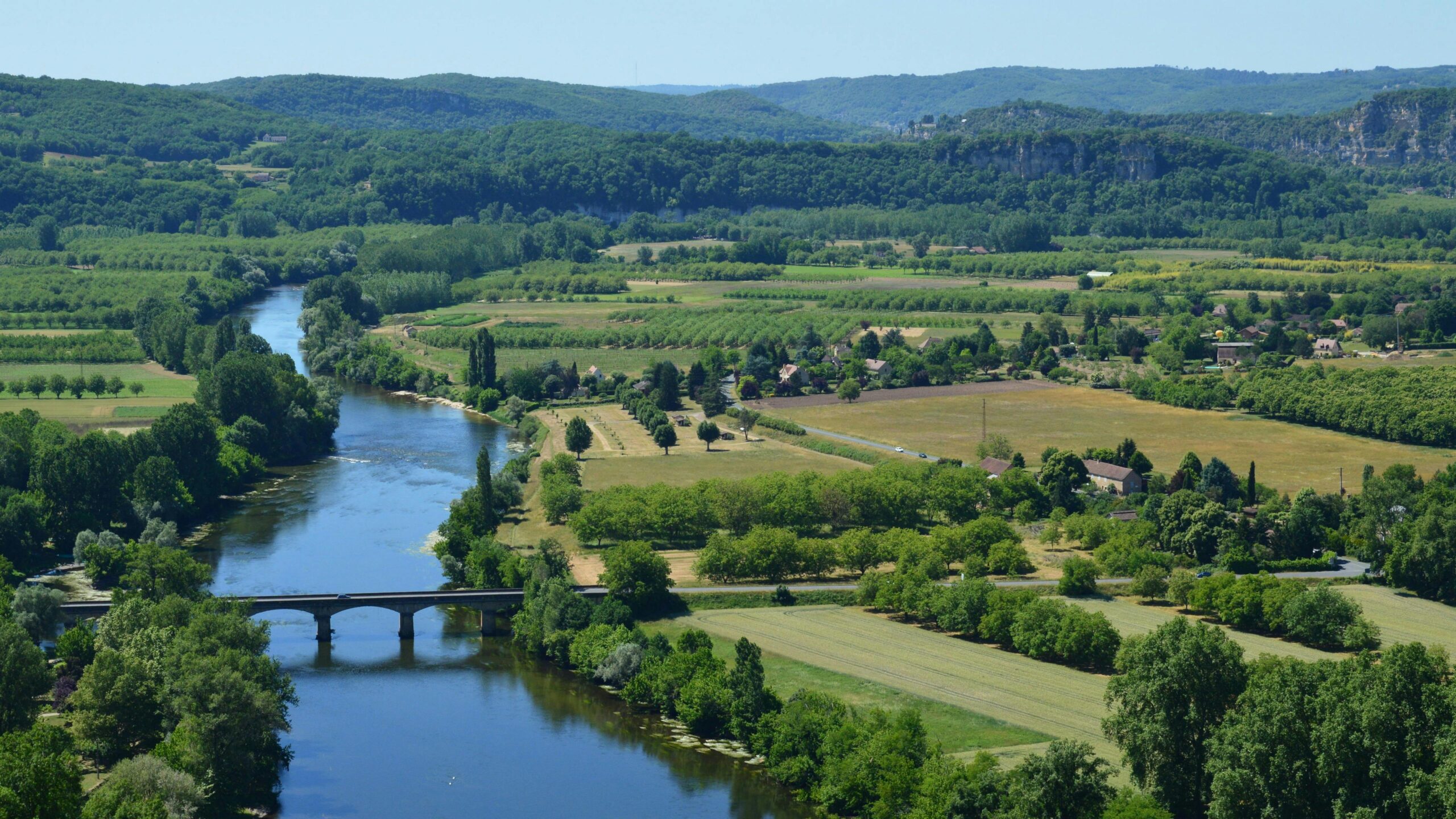
As you get closer to the venue, motorways often give way to quieter roads, villages and countryside.
Then the sat-nav announces you’re only a few minutes away.
That’s when the excitement really starts.
5. Arriving at the Lake for the First Time
You’ve finally arrived.
After months of planning and hours of travelling, the lake you’ve seen in photographs is now directly in front of you.
The temptation is obvious.
Find a swim.
Get the rods out.
Start fishing.
But don’t rush.
Most venues will have an arrival procedure.
You may meet the lake owner or manager, be shown around the facilities and receive information about the fishery.
Listen carefully.
This introduction can provide some of the most useful information you’ll receive all week.
Ask questions.
Where have fish been showing?
What areas have produced recently?
What depths are available?
What bait has been working?
Are there any snags?
Are there areas you shouldn’t fish?
Where are the toilets and showers?
Are there any rules that need explaining?
Local knowledge can save you hours of unnecessary work.
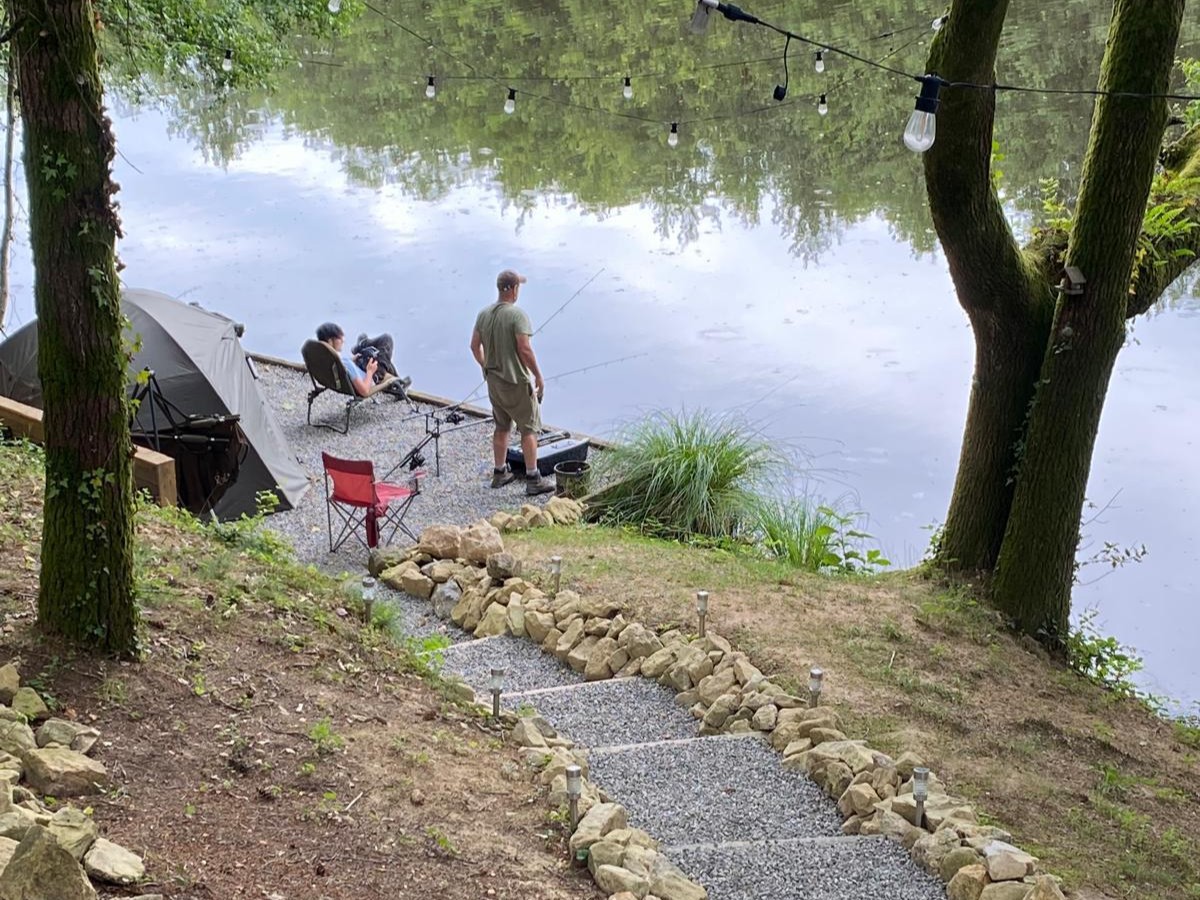
6. You May Have to Choose a Swim
Depending on the venue and booking type, your swim may already be allocated.
At other fisheries, you’ll have a choice.
If you do get to choose, don’t automatically select the swim that looks nicest.
And don’t necessarily choose the one closest to the facilities.
Look at the water.
Ask where fish have been caught recently.
Consider the wind.
Watch for signs of carp.
If possible, spend a little time observing before unloading everything from the vehicle.
Moving swims becomes considerably less appealing once you’ve erected a bivvy, unpacked the bedchair and spread half your belongings around the place.
Choose carefully.
7. Don’t Expect France to Be Easy
This is probably one of the biggest misconceptions surrounding French carp fishing.
You arrive in France.
Cast out.
And enormous carp immediately start throwing themselves onto your hooks.
Unfortunately, the carp haven’t read that particular script.
Some French lakes can produce fantastic action.
Others can be extremely challenging.
Even a heavily stocked lake can suddenly become difficult because of changing weather, angling pressure or fish behaviour.
You’re still carp fishing.
Location matters.
Presentation matters.
Baiting matters.
And sometimes, despite doing everything correctly, the fish simply don’t cooperate.
Don’t panic if the first night passes without a bite.
You have several days ahead of you.
Use them.
8. The First 24 Hours Can Teach You a Lot
Your first day shouldn’t only be about catching.
It’s also about learning.
Watch the lake.
Where are fish showing?
Are particular areas receiving repeated activity?
Has the wind changed?
Are carp visiting the margins?
What depth are you fishing?
Are other anglers seeing anything?
The biggest advantage of a week-long session is time.
At home, you might only have a few hours to make something happen.
In France, you can gradually build a picture of the lake.
A quiet first night doesn’t mean a bad holiday.
It simply means you’re still learning.
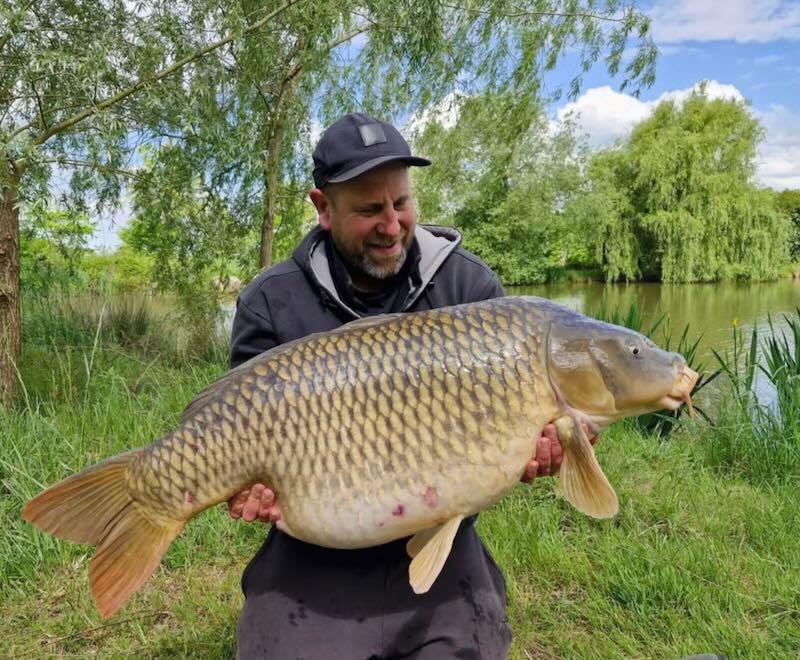
9. Your First French Carp Is a Special Moment
Then it happens.
Perhaps you’re making coffee.
Maybe you’re sitting talking with your mate.
Or perhaps you’re asleep.
The alarm suddenly sounds.
And for the first time, you’re connected to a carp in France.
At that moment, the months of planning disappear.
The crossing.
The motorway.
The packing.
The research.
None of it matters.
You’re playing your first French carp.
It doesn’t have to be a 50.
It doesn’t have to be a personal best.
That first fish will always be part of the story of your first trip.
And if it is a personal best?
Even better.
10. French Carp Can Be Powerful
Depending on where you normally fish, you may notice something else.
French carp can pull.
Hard.
Obviously, carp don’t become stronger simply because they’ve crossed an international border, but many French fisheries contain large, powerful fish living in rich environments.
When a serious carp heads towards a snag or margin, you’ll know about it.
Make sure your tackle is appropriate for the venue.
Check the fishery’s rules before travelling, particularly regarding:
- Minimum line strength
- Leader materials
- Hook patterns
- Barbed or barbless hooks
- Number of rods
- Fish-care equipment
Many fisheries also provide landing nets, unhooking mats or weigh slings to help prevent the spread of fish diseases between venues.
Never assume the rules will be the same as your home water.
11. Baiting for a Full Week Is Different
When you normally fish short sessions, it can be difficult to judge how much bait you’ll need for seven days.
The answer isn’t simply:
As much as you can fit in the car.
You don’t have to introduce enormous quantities of bait just because you’re in France.
Start by understanding the lake.
Speak to the owner.
Find out what the carp regularly eat.
Some venues sell their own pellets, particles or boilies, which can be useful because the fish may already be familiar with them.
Watch how the fish respond.
You can always increase baiting if the situation demands it.
Removing ten kilos of bait from the lake is considerably more difficult.
12. You Will Probably Take Too Much Stuff
Almost everyone does on their first trip.
Seven days sounds like an extremely long time when you’re packing.
Suddenly, everything appears essential.
Extra clothes.
Extra tackle.
Extra bait.
Extra cooking equipment.
Extra everything.
Then you arrive and realise you didn’t use half of it.
That’s normal.
Your second French trip will probably involve slightly less equipment.
By the fifth trip, you’ll have a much better idea of what you actually need.
But for your first holiday, make a proper checklist.
Important items such as travel documents, medication, chargers and essential fishing equipment deserve far more attention than whether you’ve packed a fourth saucepan.
13. Food Becomes Surprisingly Important
Fishing for a week makes you hungry.
And living entirely on crisps, biscuits and instant noodles stops being entertaining surprisingly quickly.
Plan your food.
Some anglers bring everything with them.
Others visit a French supermarket after arriving.
Some venues offer food packages where meals are prepared for you.
That can be particularly appealing after you’ve spent an entire day concentrating on the fishing.
If you’re self-catering, meals don’t have to be complicated.
But sitting down to a decent dinner beside the lake can become one of the most enjoyable parts of the day.
And yes, visiting a French supermarket for the first time can become an adventure in itself.
14. Don’t Spend Seven Days Staring at Your Rods
This is a holiday.
Remember that.
Yes, you want to catch carp.
But you don’t have to spend every second sitting directly behind three rods.
Take a walk around the lake if permitted.
Talk to the venue owner.
Cook something decent.
Have a laugh with the people you’ve travelled with.
Visit the local village or supermarket.
Sit beside the water with a coffee and simply enjoy being somewhere different.
Some of the memories you take home won’t involve fish at all.
They’ll be the conversations.
The meals.
The things that went wrong.
The ridiculous moments that become stories repeated for years.
Enjoy the whole experience.
15. The Week Goes Faster Than You Expect
On arrival, seven days feels like forever.
By Tuesday, you’ve settled into the routine.
By Thursday, you’re wondering where the week has gone.
Then suddenly, it’s your final night.
This is why it’s worth enjoying every stage of the holiday rather than constantly thinking about the next fish.
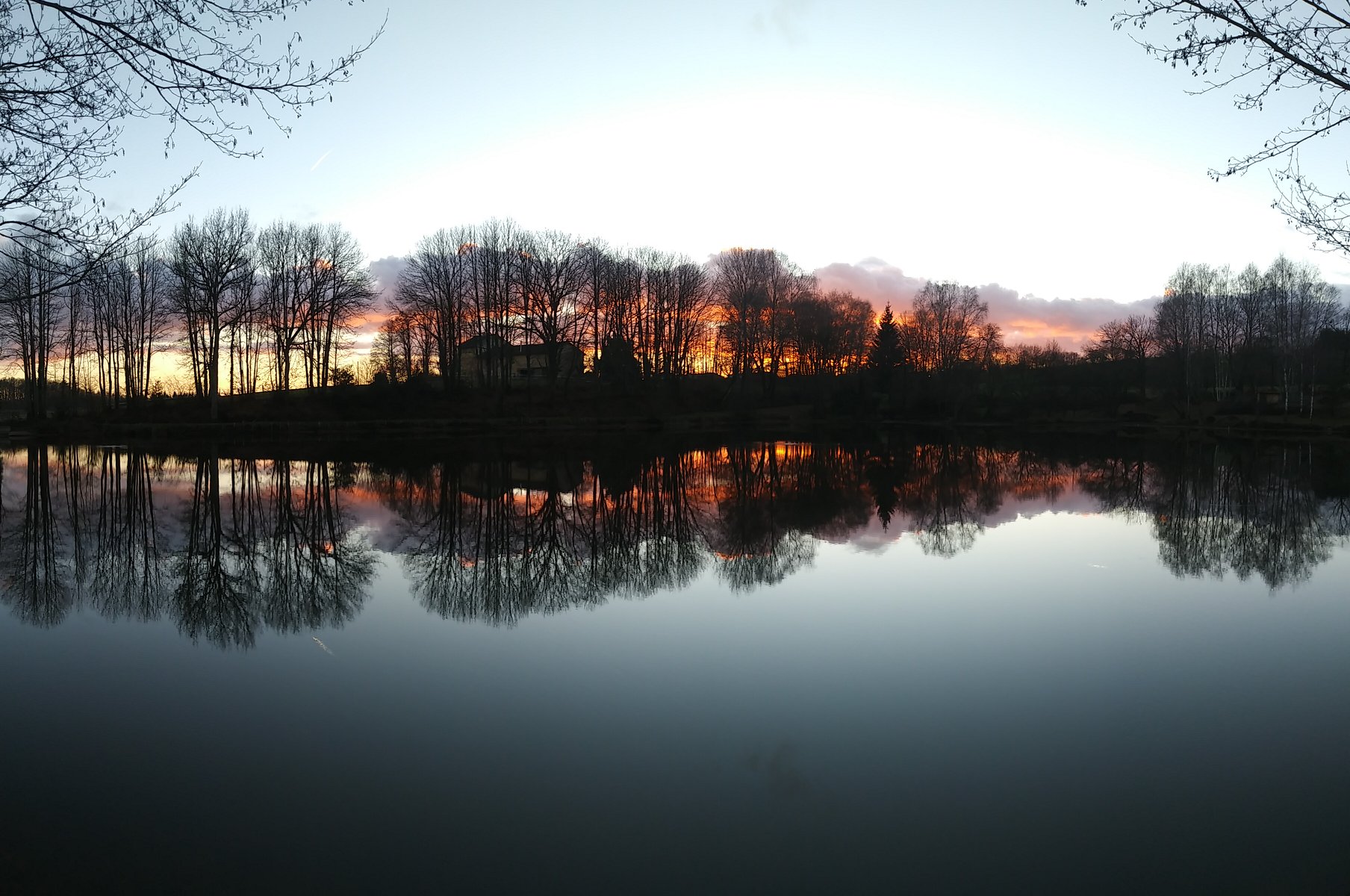
Take photographs.
Not just trophy shots.
Photograph the lake.
Your swim.
The sunrise.
Your mates.
The bivvy.
The ridiculous meal someone attempted to cook.
The empty lake at first light.
Years later, those photographs may bring back just as many memories as the picture of your biggest carp.
16. The Final Morning Feels Very Different
Arrival day is exciting.
Departure day isn’t.
The bivvy comes down.
The bedchair disappears into the vehicle.
The rods are gradually packed away.
And the swim that looked like home for a week becomes empty again.
There is usually one final hope.
Maybe you’ll get a last-minute bite.
Perhaps one of the rods stays out while everything else is packed.
Sometimes it happens.
Often it doesn’t.
Eventually, the final rod comes in.
Your first French carp fishing holiday is over.
But there’s still one problem.
17. You’ll Probably Start Planning the Next Trip on the Way Home
It happens remarkably quickly.
You haven’t even reached the motorway and someone says:
“We should do this again next year.”
Then the discussion starts.
Same lake?
Different lake?
Bigger carp?
More action?
Further south?
Whole lake next time?
Maybe somewhere elsewhere in Europe?
This is how one French fishing holiday turns into an annual tradition.
Once you’ve experienced a full week beside a French carp lake, normal weekend sessions can suddenly feel rather short.
Ready for Your First Carp Fishing Holiday in France?
Your first trip to France doesn’t need to be complicated.
Start with the basics.
Choose a lake that matches your experience and expectations.
Book early enough to get the dates you want.
Plan your journey.
Check the fishery rules.
Take suitable tackle.
Listen to the people who know the lake.
And when you arrive, don’t put yourself under unnecessary pressure.
You don’t need to catch the lake record.
You don’t need to catch 20 fish.
You don’t have to prove anything.
You’re there to experience something new.
At Angling Paradise, you can explore carp fishing holidays across France, from runs waters and big-carp lakes to exclusive venues, individual bookings and lakes with accommodation.
Find the style of fishing that suits you and start planning your first adventure.
Because everyone who regularly fishes in France had a first trip once.
Maybe it’s time for yours.
Final Thoughts
Your first carp fishing holiday in France is something you’ll remember.
You’ll remember seeing the lake for the first time.
You’ll remember setting the rods.
You’ll remember the first alarm.
You’ll remember your first French carp.
You’ll probably remember something you forgot to pack.
And you’ll almost certainly remember the journey home while discussing where you’re going next.
The fish are part of it.
But so are the people, the journey, the scenery and the experience of spending a week doing something you love.
Choose your lake. Plan the journey. Pack the car. Cross the Channel.
Your first French carp fishing adventure is waiting.